Knowing how to store peptides correctly is one of the simplest ways to protect your research. Even a high-purity peptide can degrade within days if it is exposed to heat, moisture, light or repeated freeze-thaw cycles. This laboratory guide covers storage of lyophilised and reconstituted peptides, the chemical reasons peptides break down, and practical handling tips. It applies to all research compounds supplied by Peptide Sciences.
Why Peptides Degrade
Peptides are chains of amino acids, and several of those amino acids are chemically vulnerable. Understanding the main degradation routes helps explain every storage recommendation:
- Hydrolysis: water slowly breaks peptide bonds, which is why dry, lyophilised powder is far more stable than solutions.
- Oxidation: methionine, cysteine and tryptophan residues react with oxygen, especially in light and at higher temperatures.
- Deamidation: asparagine and glutamine can convert to acidic residues, particularly at neutral to basic pH.
- Aggregation and adsorption: some peptides, especially lipidated ones, clump together or stick to plastic surfaces.
- Microbial contamination: non-sterile solutions can support bacterial growth that degrades the peptide.
How to Store Lyophilised Peptides
Lyophilisation (freeze-drying) removes almost all water from the peptide, which is why research peptides ship as a powder. To keep lyophilised peptides stable:
- Store sealed vials in the freezer at −20 °C or colder for long-term storage, or refrigerated at 2–8 °C for shorter periods.
- Keep vials in their box or another dark container to protect them from light.
- Keep the storage area dry and avoid frost-free freezers, whose warming cycles cause temperature swings.
- Before opening a cold vial, let it reach room temperature in a desiccator or sealed bag so moisture does not condense on the powder.
- Record the lot number and date received so storage time can be traced.
| Form | Condition | Typical guidance |
|---|---|---|
| Lyophilised (sealed) | Room temperature | Short periods only, e.g. during shipping |
| Lyophilised (sealed) | 2–8 °C | Short- to medium-term storage |
| Lyophilised (sealed) | −20 °C or below | Preferred for long-term storage |
| Reconstituted solution | 2–8 °C | Short-term; follow the stability window on the COA |
| Reconstituted aliquots | −20 °C or −80 °C | Longer-term; thaw each aliquot once only |
Reconstituting Peptides in the Lab
Reconstitution means dissolving the lyophilised powder in a suitable solvent to create a working stock. The right solvent depends on the peptide’s sequence and the assay. Sterile water, bacteriostatic water or a buffer is common for hydrophilic peptides, while hydrophobic peptides may need a small amount of an organic co-solvent before dilution. The concentration of the stock is set by the experimental protocol and the principal investigator.
Good Reconstitution Practice
- Work aseptically with sterile solvents, tips and vials.
- Add solvent slowly down the side of the vial rather than directly onto the powder.
- Swirl or roll the vial gently; avoid vigorous shaking, which can cause foaming and aggregation.
- Check the solution is clear and free of particles before use.
- Use low-protein-binding tubes for lipidated or very dilute peptides.
How to Store Reconstituted Peptides
Once in solution, peptides become much less stable. The best practice is to divide the stock into single-use aliquots immediately after reconstitution and freeze any portions not needed right away. Each aliquot should be thawed only once. Keep working solutions refrigerated, protected from light, and use them within the stability window given on the product’s Certificate of Analysis.
Avoid Repeated Freeze-Thaw Cycles
Each freeze-thaw cycle can cause ice-crystal damage, local concentration changes and aggregation. Aliquoting removes this problem and also limits contamination risk, because the main stock is never reopened.
Storage Tips for Specific Peptide Types
- Copper peptides such as GHK-Cu can change colour when they degrade; a shift from blue toward green can signal a problem.
- Lipidated peptides like semaglutide and tirzepatide can adsorb to plastics, so low-binding consumables help.
- Peptides containing methionine or cysteine are oxidation-prone, so minimise air exposure and consider degassed solvents.
- Capsule products in our peptide capsules range should be kept sealed in a cool, dry place away from light.
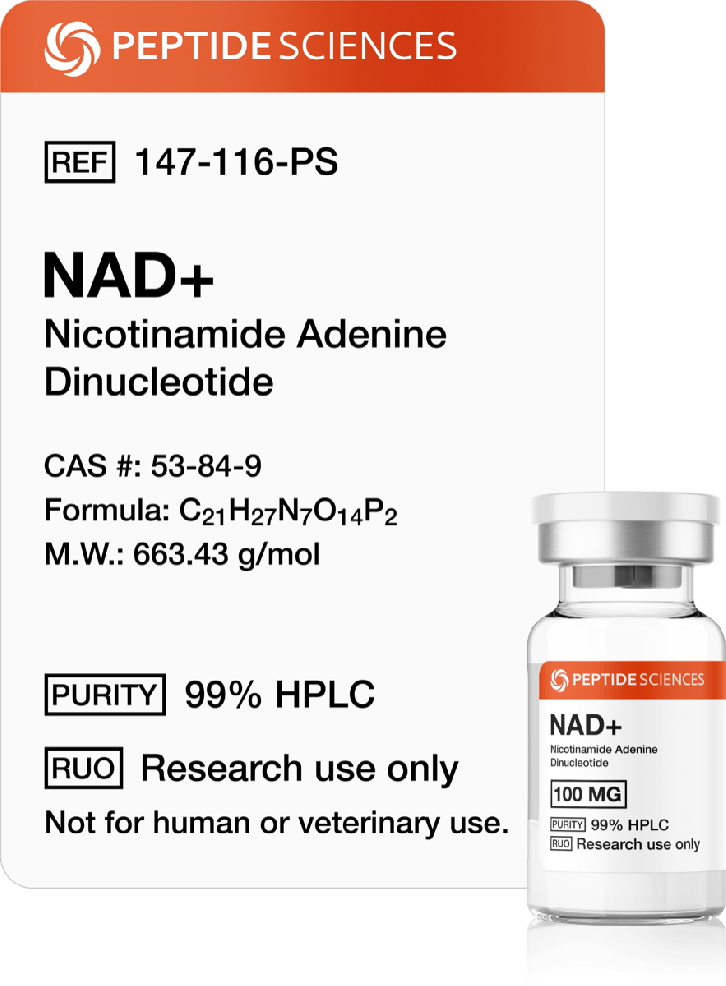
- NAD+ is light- and moisture-sensitive; see NAD+ 100mg for details.
How Peptide Sciences Protects Peptide Stability
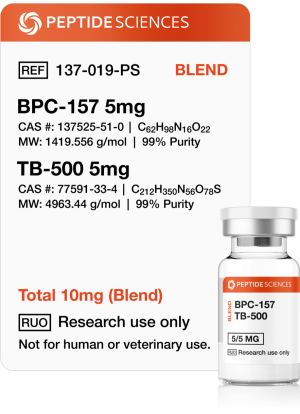
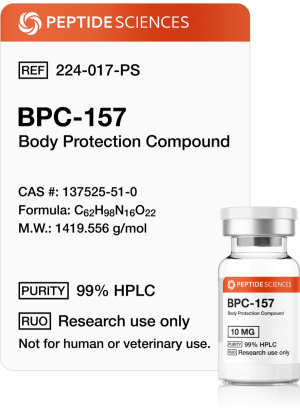
Every lot is purified by HPLC, identity-confirmed by mass spectrometry, lyophilised and sealed before shipping in insulated packaging. The lot-specific COA lists storage conditions so you can maintain stability from the moment your order arrives. Learn more in our complete guide to research peptides, or read our comparison of BPC-157 vs TB-500.
Quick Checklist
- Freeze sealed lyophilised vials long term; refrigerate for short periods.
- Protect from light and moisture at all times.
- Warm vials to room temperature before opening.
- Reconstitute aseptically and swirl gently.
- Aliquot immediately and avoid freeze-thaw cycles.
- Follow the stability window on the COA.
For further reading, see published work on peptide stability on PubMed, or browse the full Peptide Sciences catalog. All products are for laboratory research use only.