Anti Aging Peptides
Anti-Aging and Bioregulator Peptides for Research
The Anti-Aging vertical at Peptide Science covers two mechanism families. The first is the mitochondrial-derived peptide class (MOTS-c, Humanin), small open-reading-frame products characterised in preclinical work for mitochondrial-stress signalling. The second is the Khavinson short-peptide cytomedine family, organ-specific bioregulators developed in late-Soviet and Russian gerontological research. The hub also carries telomere-research material (Epithalon and N-Acetyl Epithalon Amidate), the senolytic FOX04-DRI (Proxofim), the AMPK-activator AICAR, and the NAD-plus precursor NAD+ in 100 mg and 750 mg vials. All compounds are supplied lyophilised at 99% or greater HPLC purity for in-vitro and animal-model research.
Compound Class Taxonomy
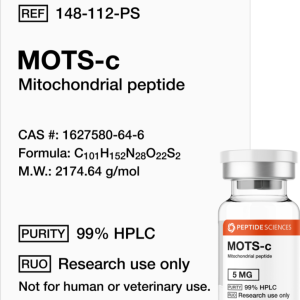
Mitochondrial-derived peptides are short open-reading-frame products encoded within the mitochondrial genome. MOTS-c is a 16-residue peptide encoded within mitochondrial 12S rRNA, characterised in preclinical models for AMPK-pathway signalling. Humanin is a 24-residue peptide encoded within mitochondrial 16S rRNA, characterised in cell-survival and apoptosis-resistance assays. Khavinson short peptides (sometimes called cytomedines or bioregulators) are 2-to-4-residue sequences derived in the 1970s from organ-specific tissue extracts, with each peptide referencing a specific organ system (the Khavinson catalogue is in the dedicated bioregulator peptide range). Epithalon (Ala-Glu-Asp-Gly) is the prototype pineal short peptide characterised in preclinical telomere and circadian-pathway research; N-Acetyl Epithalon Amidate is the N-acetylated, C-amidated stability-modified variant. For longevity overlap with the healing axis, browse the healing peptide catalogue.
Featured Products in This Collection
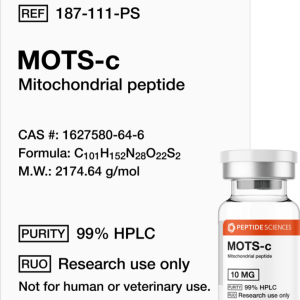
MOTS-c 5mg: 16-residue mitochondrial-derived peptide, AMPK-research compound
MOTS-c 10mg: double-strength vial of the same sequence
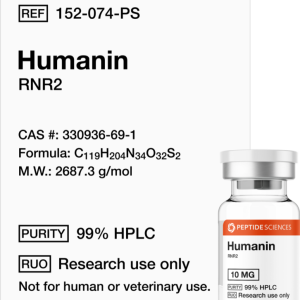
Humanin 10mg: 24-residue mitochondrial-derived peptide
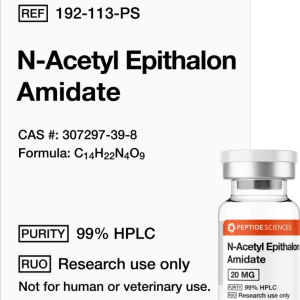
N-Acetyl Epithalon Amidate 20mg: stability-modified Epithalon variant
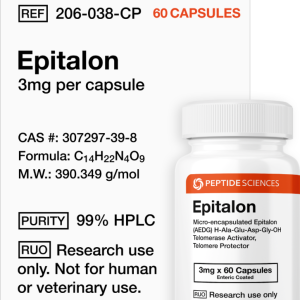
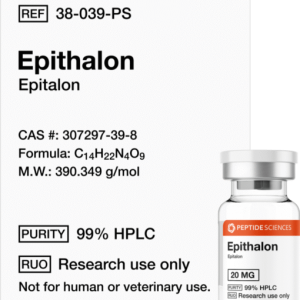
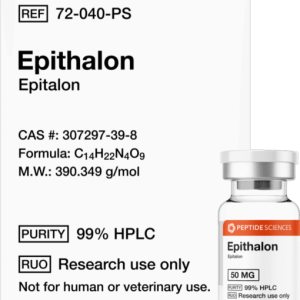
Epithalon (Epitalon) 20mg: native Ala-Glu-Asp-Gly pineal short peptide
Epithalon 50mg: high-mass vial of the native sequence
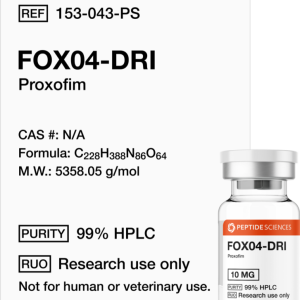
FOX04-DRI 10mg (Proxofim): D-retro-inverso FOXO4 peptide for senescence research
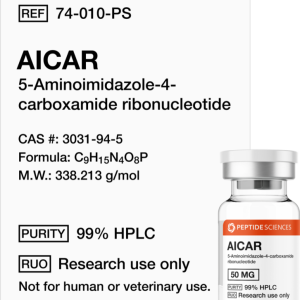
AICAR 50mg: AMP-activated protein kinase activator
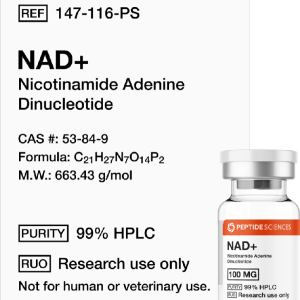
NAD+ 100mg: nicotinamide adenine dinucleotide precursor
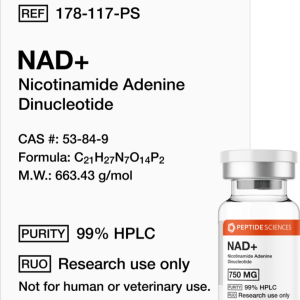
NAD+ 750mg: bulk research vial
How Researchers Use This Category
Gerontology and cell-senescence laboratories pull from this hub for telomere-length assays, mitochondrial-membrane-potential studies, AMPK and SIRT pathway research, and senescent-cell clearance work using D-retro-inverso peptides such as FOX04-DRI. Bioregulator research draws on the Khavinson catalogue (Pinealon, Cortagen, Livagen, Prostamax, Vesilute, Vesugen, Vilon, Cardiogen, Chonluten, Ovagen, Pancragen, Testagen) for organ-specific short-peptide work. For the cognitive-side overlap, see the nootropic peptide range where Pinealon also appears.
Quality, COA, and Shipping
Every batch is HPLC-verified at 99% or greater purity with mass-spectrometry identity confirmation. Vials ship lyophilised in temperature-monitored insulated packaging via overnight or two-day courier. A signed Certificate of Analysis accompanies every order.
Common Research Questions
What are Khavinson short peptides?
Khavinson short peptides, also called cytomedines or bioregulators, are 2-to-4-residue sequences derived in late-Soviet and Russian gerontological research from organ-specific tissue extracts. Each peptide in the family references a specific organ system in published preclinical and clinical-research literature.
What is the difference between Epithalon and N-Acetyl Epithalon Amidate?
Epithalon is the native Ala-Glu-Asp-Gly tetrapeptide. N-Acetyl Epithalon Amidate adds an N-acetyl group at the N-terminus and a C-terminal amidation for enzymatic-stability modification. Both are studied in preclinical telomere and circadian-pathway research.
What is FOX04-DRI?
FOX04-DRI (also catalogued as Proxofim) is a D-retro-inverso analogue of a FOXO4 interaction peptide, characterised in preclinical research for senescent-cell clearance via disruption of the FOXO4 plus p53 interaction.
External reference: Khavinson VK et al. Peptides and Ageing. Neuro-endocrinology letters, 2002
For laboratory research and development use only. Not for human or veterinary consumption. Products supplied by Peptide Science have not been evaluated by the U.S. Food and Drug Administration. Purchasers acknowledge they are qualified researchers age 21 or older.
Showing 1–12 of 13 results
-
Anti Aging Peptides
FOX04-DRI 10mg (Proxofim)
Original price was: $300.00.$250.00Current price is: $250.00. Add to cart