Research peptides are short chains of amino acids synthesised for laboratory study, used by scientists to investigate how signalling molecules influence cells, tissues and whole biological systems. This guide explains what research peptides are, how they are made and tested, the main categories studied today, and what to look for in a supplier. At Peptide Sciences, every compound is sold strictly for in-vitro and preclinical research use.
What Are Research Peptides?
A peptide is a molecule made of two or more amino acids joined by peptide bonds. Proteins are simply very long peptides, but most research peptides are much shorter, typically between 2 and 50 amino acids. Many are copies or modified fragments of naturally occurring hormones, growth factors or signalling molecules. Because their sequences can be precisely controlled, they are ideal tools for isolating a single biological mechanism in the lab.
The term “research peptide” describes how the compound is supplied and used, rather than a specific chemical class. These products are manufactured for laboratory investigation, are not approved drugs, and are not intended for human or veterinary use. They support basic science, assay development, receptor pharmacology, formulation science and preclinical animal studies.
How Research Peptides Are Made
Almost all modern research peptides are produced by solid-phase peptide synthesis (SPPS). In SPPS, the first amino acid is anchored to a resin bead and each subsequent amino acid is added one at a time in a repeating cycle of coupling and deprotection. When the sequence is complete, the peptide is cleaved from the resin and its protecting groups are removed.
The crude product always contains impurities such as truncated sequences, deletion peptides and residual reagents. It is therefore purified by reverse-phase high-performance liquid chromatography (RP-HPLC), then freeze-dried (lyophilised) into a stable powder and sealed in vials. Lyophilisation removes water, which dramatically slows degradation and allows peptides to be shipped and stored.
Why Purity and Testing Matter
Impurities can bind the same receptors, compete with the target peptide or produce effects of their own, so low-purity material can make results impossible to interpret or reproduce. Reputable suppliers verify every batch with at least two analytical methods:
- HPLC measures purity by separating the target peptide from impurities and reporting its share of the total signal.
- Mass spectrometry (MS) confirms identity by checking that the measured molecular weight matches the theoretical weight of the sequence.
- Certificate of Analysis (COA) documents these results for a specific lot so researchers can record and trace the material used in each experiment.
Peptide Sciences holds every lot to a minimum of 99% HPLC purity with mass-spec identity confirmation, and ships the lot-matched COA with each order. You can read more about our process on the About Peptide Sciences page.
Main Categories of Research Peptides
Research peptides are usually grouped by the biological system they are used to study. The most active areas today include:
Tissue-Repair Peptides
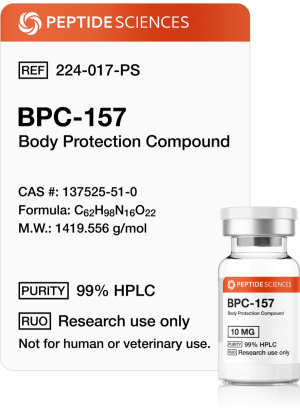
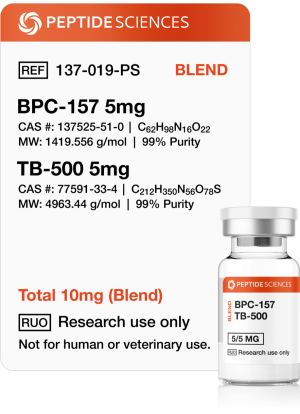
Compounds such as BPC-157 and TB-500 (thymosin beta-4) are studied in preclinical models of tendon, muscle, gut and wound repair. Browse the full healing peptides collection.
Metabolic and Incretin Peptides
GLP-1 receptor agonists like semaglutide, the dual agonist tirzepatide and the triple agonist retatrutide are at the centre of obesity and diabetes research. See our weight loss peptides category.
Growth Hormone Axis Peptides
GHRH analogues (CJC-1295, sermorelin, tesamorelin) and ghrelin-receptor agonists (ipamorelin, GHRP-2, GHRP-6) are used to study pituitary GH release. Explore growth hormone peptides.
Longevity, Cognitive and Cosmetic Peptides
Ageing research uses compounds like Epithalon, MOTS-c and NAD+ (anti-aging peptides), neuroscience labs study Semax and Selank (nootropic peptides), and skin scientists formulate with GHK-Cu and Matrixyl (cosmetic peptides).
Lyophilised Vials, Blends and Capsules
Most research peptides are supplied as lyophilised powder in sealed vials. Some suppliers also offer pre-mixed peptide blends, which combine two or more peptides at a fixed ratio, and peptide capsules for oral-delivery research. Topical-grade powders are used in cosmetic formulation studies.
How to Choose a Research Peptide Supplier
- Lot-specific COAs showing both HPLC purity and mass-spec identity.
- A clearly stated minimum purity specification (ideally ≥98–99%).
- Correct handling: lyophilised product, sealed vials and protective packaging.
- Transparent research-use-only labelling with no medical or dosing claims.
- Responsive support that can answer questions about a specific lot.
Storage and Handling Basics
Lyophilised peptides are stable for long periods when kept cold, dry and away from light. Once reconstituted they become far more vulnerable to degradation. For a full walkthrough, read our guide on how to store research peptides.
Research Use Only
Research peptides are intended exclusively for laboratory research by qualified professionals. They are not drugs, supplements or cosmetics, and must not be used in humans or animals outside approved research protocols. Ready to start? Browse the complete Peptide Sciences research peptide catalog, or read more about the published literature on peptides in PubMed.