Orforglipron research has moved quickly from structural biology papers to large late-stage clinical programmes, making it one of the most discussed incretin-class compounds in metabolic science. Unlike semaglutide or tirzepatide, orforglipron is not a peptide at all: it is an orally available, non-peptide small molecule that activates the GLP-1 receptor. This spotlight explains what orforglipron is, how it has been studied, how it compares with peptide GLP-1 agonists, and what to look for when sourcing it for laboratory work.
What Is Orforglipron?
Orforglipron (development codes OWL833 and LY3502970) was discovered by Chugai Pharmaceutical and later licensed to Eli Lilly for development. It belongs to a newer class sometimes called non-peptide GLP-1 receptor agonists. Key characteristics described in the literature include:
- Small-molecule structure rather than an amino-acid chain, so it does not rely on the peptide-protection strategies used for oral semaglutide.
- Oral bioavailability without the strict fasting and water-volume conditions associated with oral peptide formulations.
- A long half-life reported in human pharmacokinetic studies, which supports once-daily administration in clinical trial protocols.
Orforglipron Mechanism of Action at the GLP-1 Receptor
Native GLP-1 and peptide analogues bind across the receptor's extracellular domain and transmembrane core. Structural work published in PNAS (Kawai et al., 2020) showed that orforglipron instead occupies a pocket within the transmembrane region, engaging the receptor in a distinct way. Two features from that research are especially relevant for lab teams:
- Biased signalling: orforglipron has been characterised as a partial agonist that favours G-protein/cAMP signalling with comparatively low beta-arrestin recruitment. Biased agonism is an active research area because it may influence receptor internalisation and desensitisation.
- Species selectivity: the compound shows markedly lower activity at rodent GLP-1 receptors than at the human receptor. Preclinical studies therefore used humanised GLP-1 receptor mouse models and non-human primates. Researchers planning in vivo or cell-based work should account for this when selecting models and receptor constructs.
What Published Studies Have Examined
Orforglipron has been evaluated across a broad clinical programme. Phase 2 results in participants with obesity and in type 2 diabetes were published in 2023 (including Wharton et al. in the New England Journal of Medicine), and Lilly has since reported Phase 3 trials from its ACHIEVE (type 2 diabetes) and ATTAIN (obesity) programmes. Endpoints studied include glycaemic markers, body-weight change, cardiometabolic risk factors and tolerability. As with other GLP-1 receptor agonists, gastrointestinal events were the most commonly reported adverse effects in these trials. Researchers should consult the primary publications directly for study designs and data rather than relying on summaries.
Orforglipron vs Peptide GLP-1 Agonists
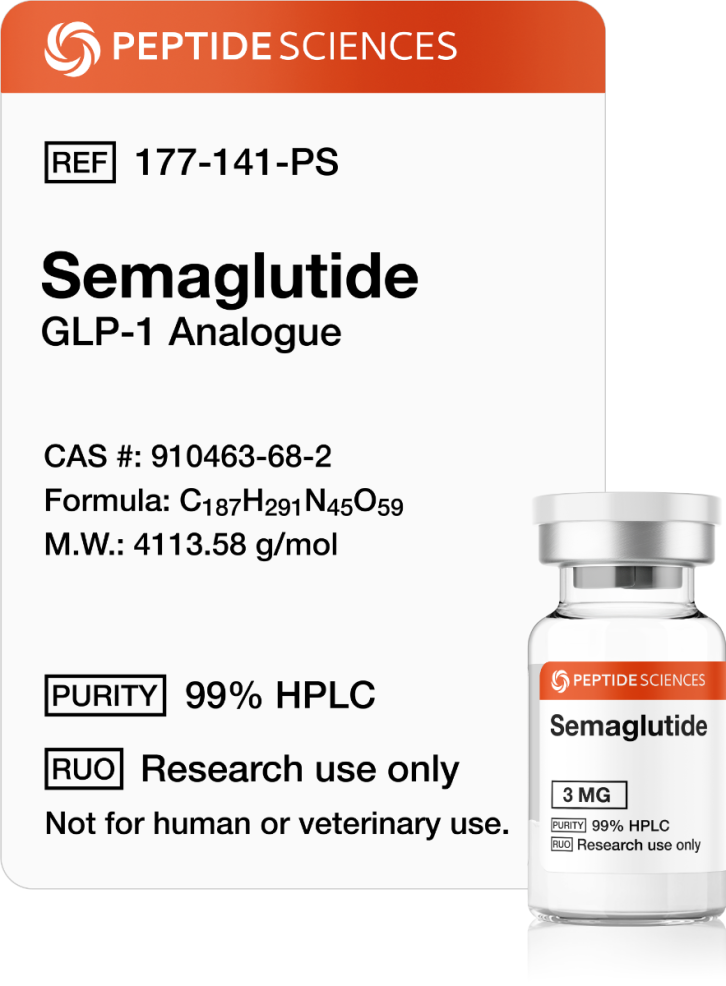
A common research question is how a small-molecule GLP-1 agonist differs from peptide compounds such as Semaglutide 3mg research peptide or the dual GIP/GLP-1 agonist Tirzepatide 5mg. The main points of contrast are:
- Molecular class: orforglipron is a synthetic small molecule; semaglutide and tirzepatide are acylated peptides.
- Receptor coverage: orforglipron is selective for GLP-1R, while tirzepatide engages both GIP and GLP-1 receptors and retatrutide adds glucagon receptor activity.
- Binding mode and signalling: orforglipron's transmembrane binding and G-protein bias differ from the full agonism typical of peptide analogues.
- Form supplied: peptides are typically supplied as lyophilised powder, whereas orforglipron is supplied as pre-measured capsules.
Orforglipron Research Products: 6mg and 12mg Capsules
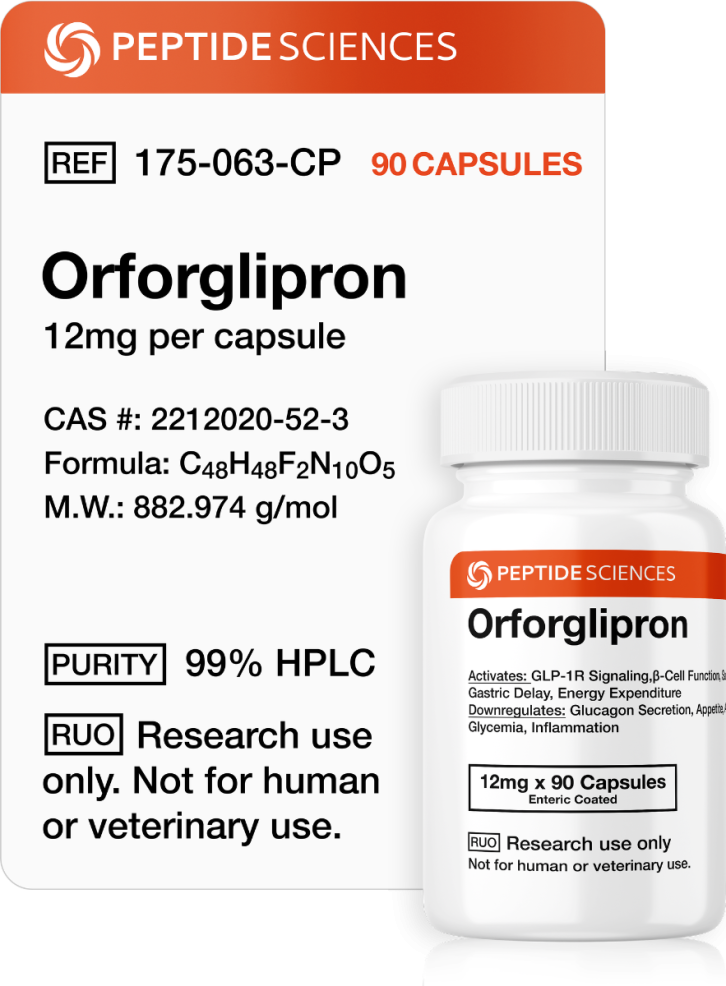
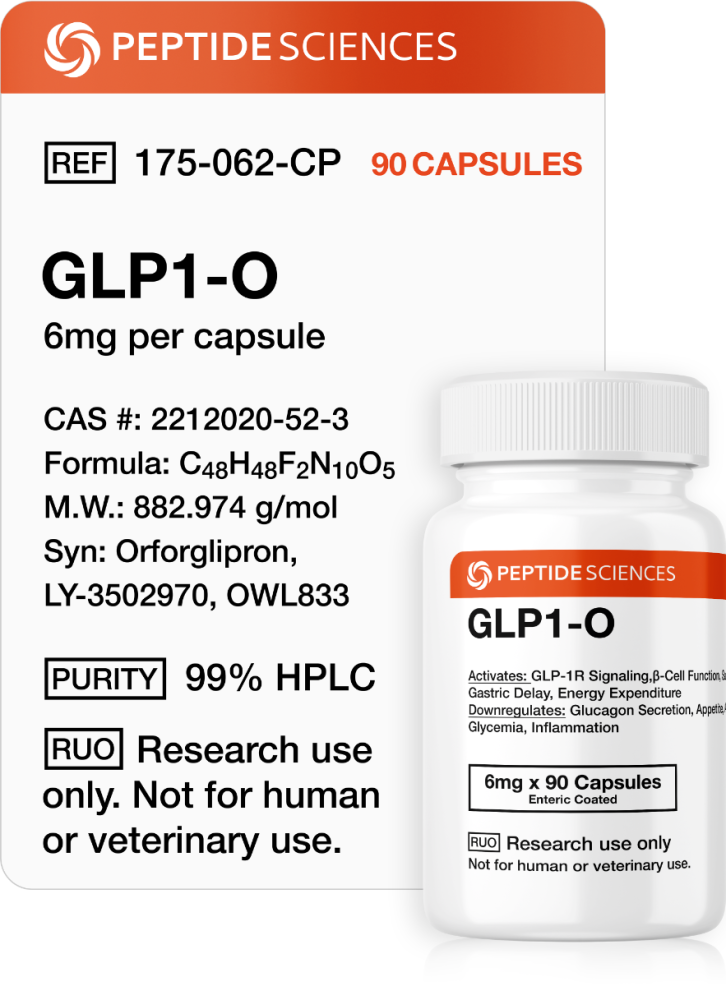
Peptide Sciences supplies orforglipron in two capsule strengths for laboratory research:
Capsule formats give research teams a fixed, pre-measured quantity of compound per unit, which can simplify inventory tracking and reduce weighing steps compared with bulk powder. Choose the strength that best matches your protocol's total material requirements.Purity, Verification and Lab Storage
Because orforglipron is a small molecule, identity and purity verification relies on the same analytical tools used for peptides: HPLC for purity and mass spectrometry for molecular identity. Before using any batch, review the certificate of analysis and confirm the reported purity, molecular weight and batch number match your records. Practical lab-handling points:
- Store capsules sealed, dry and away from light and heat, following the label.
- Record lot numbers and receipt dates for traceability.
- Keep compounds in a controlled-access area, clearly labelled for research use only.
Orforglipron FAQ
Is orforglipron a peptide?
No. Orforglipron is a non-peptide small molecule that acts as a GLP-1 receptor agonist. It is often grouped with incretin peptides because it targets the same receptor.
Why do preclinical orforglipron studies use humanised mice?
Research has shown the compound has much lower activity at rodent GLP-1 receptors, so humanised GLP-1R mouse models and non-human primates were used to study its pharmacology.
How does orforglipron differ from oral semaglutide?
Oral semaglutide is a peptide co-formulated with an absorption enhancer, while orforglipron is a small molecule designed for oral bioavailability without that formulation strategy.
What form is orforglipron supplied in for research?
Peptide Sciences supplies orforglipron as capsules in 6mg and 12mg strengths, 90 capsules per bottle.
Source Orforglipron for Your Research
Orforglipron offers researchers a useful tool for studying small-molecule GLP-1 receptor activation, biased signalling and comparisons with peptide incretin agonists. If your lab is building a GLP-1 receptor research programme, explore our orforglipron capsules alongside our peptide incretin range, each supplied with batch documentation.
Shop Orforglipron CapsulesAll products are sold strictly for laboratory research use only. They are not intended for human or animal consumption, or for diagnostic or therapeutic use. Nothing in this article is medical advice.