The AOD9604 peptide is one of the most frequently searched metabolic research compounds, and also one of the most misunderstood. Online discussion often blurs it with growth hormone, with hGH Fragment 176-191, or with newer incretin peptides. This FAQ-style guide separates what published preclinical and clinical research actually reports about AOD9604 from the common myths, so laboratory researchers can design studies and choose materials with accurate expectations.
What Is the AOD9604 Peptide?
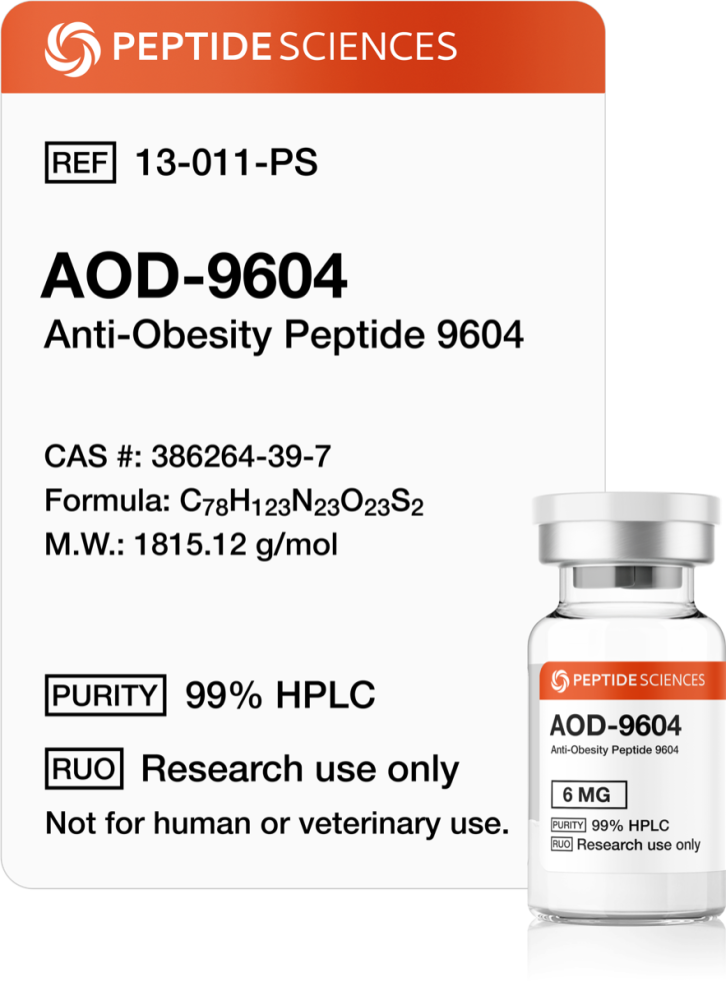
AOD9604 is a synthetic 16-amino-acid peptide modelled on the C-terminal region of human growth hormone (hGH), corresponding to residues 177–191 with an added N-terminal tyrosine. It contains a single disulfide bridge and has a molecular weight of roughly 1.8 kDa. The compound was developed in Australia in the late 1990s and early 2000s as a candidate for metabolic research, with the aim of isolating the lipid-metabolism activity attributed to the hGH C-terminus from the growth-promoting and glycaemic effects of the full 191-residue hormone.
Today the AOD9604 peptide 6mg research vial is supplied as a lyophilised powder for in vitro and animal-model work.
How AOD9604 Has Been Studied: Mechanism in Brief
Most of the mechanistic literature on AOD9604 comes from rodent studies published in the early 2000s. Key observations reported include:
- Lipolysis and lipogenesis in adipose tissue: in obese mouse and rat models, AOD9604 was reported to increase markers of lipolysis and reduce lipogenesis in fat tissue.
- Beta-3 adrenergic receptor expression: one study in obese mice reported increased beta-3 adrenergic receptor expression in adipose tissue following AOD9604 exposure.
- No IGF-1 elevation reported: unlike intact hGH, AOD9604 was not reported to raise IGF-1 in the studies that measured it, and it does not appear to act through the classic growth-promoting pathway.
- Cartilage models: a later study in a rabbit model of osteoarthritis examined intra-articular AOD9604 alongside hyaluronic acid and reported effects on cartilage outcomes, opening a second, separate line of research.
AOD9604 vs hGH Fragment 176-191: What's the Difference?
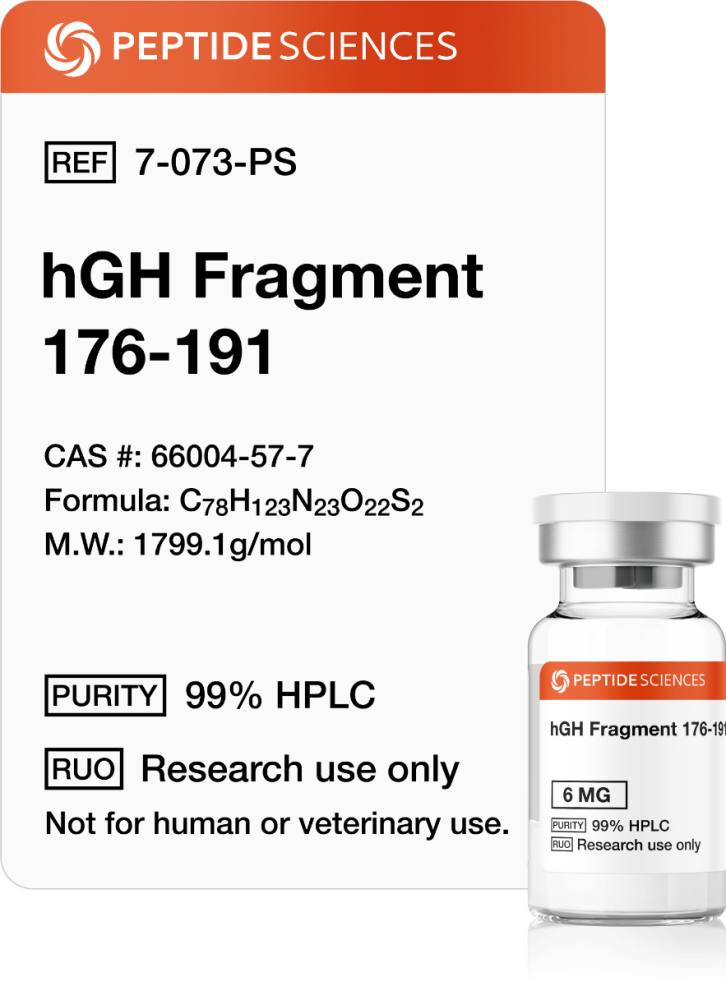
This is the single most common question researchers ask. Both names describe peptides derived from the same C-terminal stretch of hGH, and the sequences are closely related; in many catalogues they are near-identical. The practical difference is mostly one of identity and history:
- AOD9604 is the name of a specific candidate that went through formal preclinical and clinical development, so most of the published data uses that name.
- hGH Fragment 176-191 refers to the native hormone region and is the term used in much of the older structure-activity literature.
Common AOD9604 Myths, Examined
Myth 1: "AOD9604 is just growth hormone." It is a short fragment, not the full hormone. Research suggests it lacks the IGF-1-raising and growth-promoting activity of intact hGH.
Myth 2: "AOD9604 is a GLP-1 peptide." It is not related to the incretin class. GLP-1 and dual or triple agonists act on entirely different receptors; see our Semaglutide vs Tirzepatide vs Retatrutide comparison for how that class works.
Myth 3: "It was approved as a drug." It was not. A larger human trial reported in 2007 did not show a meaningful difference from placebo on its primary endpoint, and development for that indication was discontinued.
Myth 4: "Animal results translate directly to people." The mechanistic effects were observed mainly in rodent models. The gap between those findings and the clinical trial outcome is itself an important research topic.
Related Metabolic Research Compounds
Laboratories studying energy balance rarely look at a single pathway. Compounds often examined alongside AOD9604 in comparative or reference work include:
- Tesofensine 500mcg research capsules — a monoamine reuptake inhibitor studied for central regulation of appetite and energy expenditure, a mechanism entirely distinct from AOD9604.
- Fragment, CJC-1295 (No DAC) and Ipamorelin blend — combines the hGH fragment with GHRH-analogue and GH-secretagogue peptides for researchers studying the GH axis more broadly.
Purity, Handling and Storage for AOD9604 Research
Because AOD9604 contains a disulfide bond, analytical verification matters. A credible lot should come with HPLC purity data and mass spectrometry confirming the expected molecular weight; our guide on how to read a peptide certificate of analysis walks through what to check. For lab handling:
- Store lyophilised vials cold, dry and protected from light.
- Reconstitute only what an experiment needs, using an appropriate sterile diluent.
- Avoid repeated freeze-thaw cycles of reconstituted material, which can degrade short peptides.
AOD9604 FAQ
Is AOD9604 the same as HGH Frag 176-191?
They are closely related fragments of the same hGH region. AOD9604 is the specific developed candidate with its own published data set, while Fragment 176-191 is the native-region name used in earlier literature.
Does the AOD9604 peptide raise IGF-1 in research models?
The studies that measured it did not report IGF-1 elevation, which is one of the main features distinguishing it from intact growth hormone.
What research areas is AOD9604 studied in today?
Published work has focused on adipose tissue lipid metabolism in rodent models and, more recently, on cartilage outcomes in an animal model of osteoarthritis.
What form does AOD9604 come in?
It is supplied as a lyophilised (freeze-dried) powder in a sealed vial, which is the most stable format for shipping and long-term laboratory storage.
Sourcing AOD9604 for Your Laboratory
Clear expectations make for better experiments. The AOD9604 peptide is a well-characterised hGH fragment with a distinct preclinical profile, a documented clinical history, and a growing second line of research in cartilage models. If your study calls for it, choose a supplier that provides lot-specific HPLC and mass spec data, cold-chain-friendly lyophilised packaging, and clear research-use labelling.
View AOD9604 6mg Research PeptideAll products are sold strictly for laboratory research use only. They are not intended for human or animal consumption, or for diagnostic or therapeutic use. Nothing in this article is medical advice.